Ticketing
 Market:
Deutschland
Market:
Deutschland


GMI-ANG Series
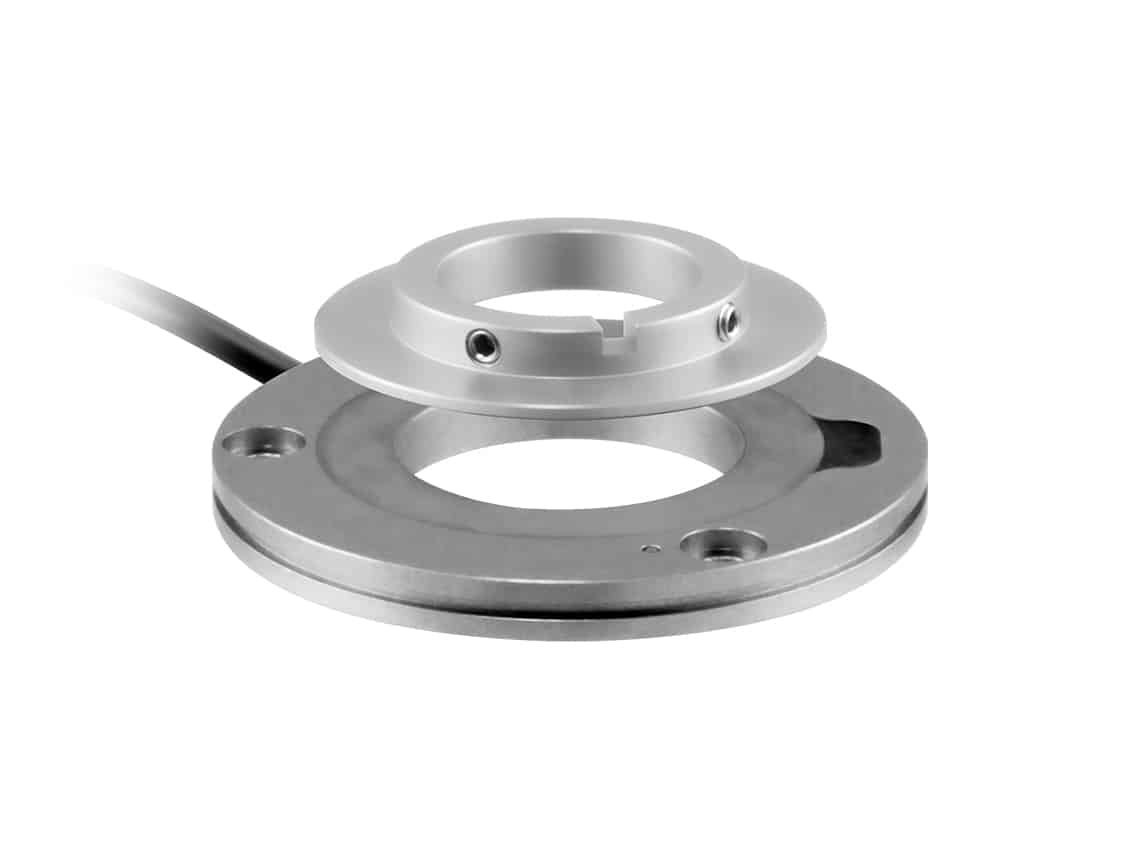
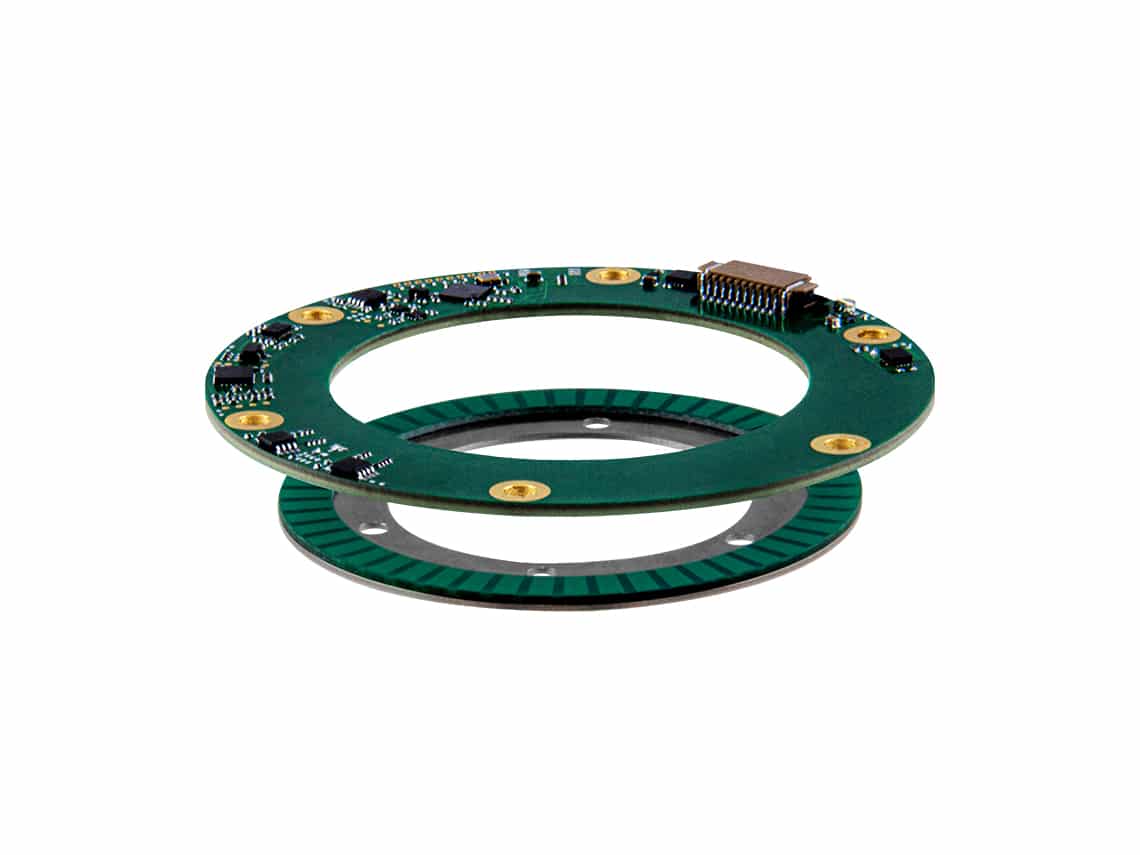
The FLUX GMI Angle Family of encoders is the highest performing in terms of accuracy and resolution.
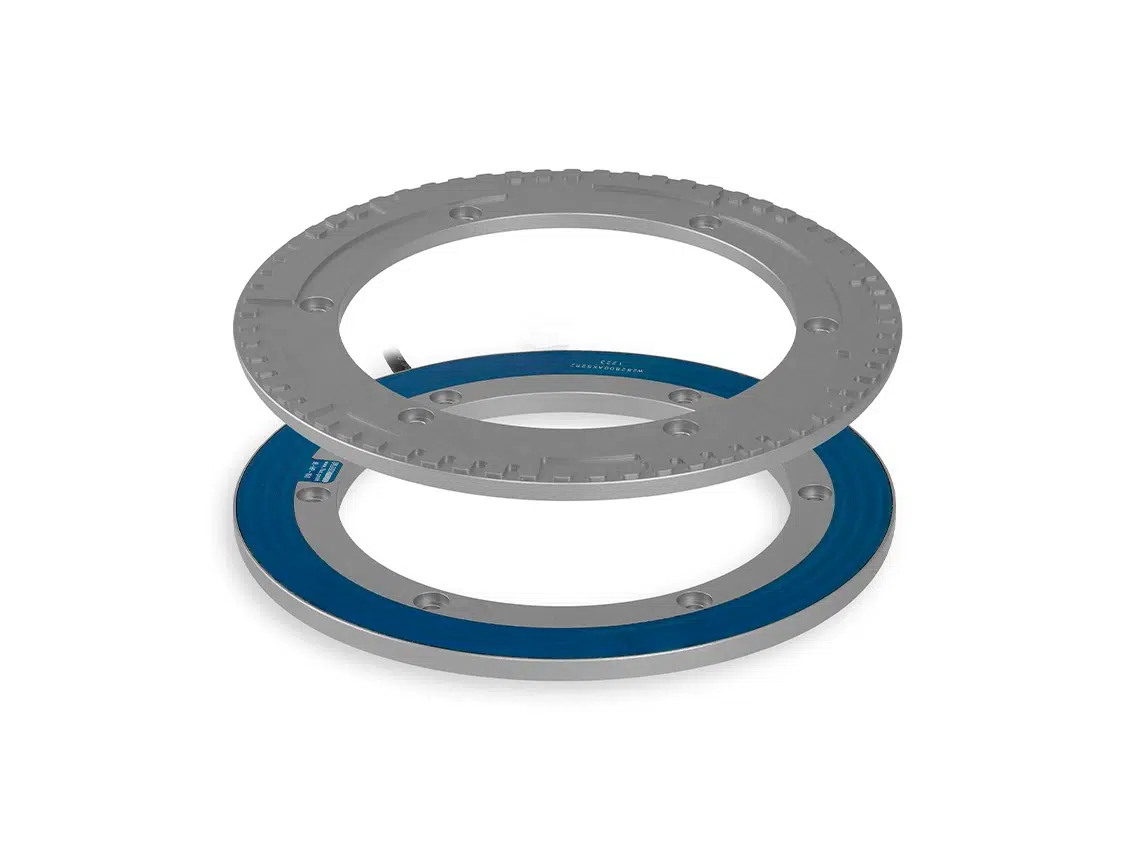
Absolute lap measurement is based on FLUX’s patented principle called GMI. It consists of two steel rings to ensure maximum robustness and ease of mounting on applications where very high accuracy is required. Available in sizes ranging from 96 to 250 mm, it finds applications in machine tools, semiconductor manufacturing, rotary tables, torque motors, and industrial robots. Different output protocols allow interfacing with all CNCs or drivers on the market.
More info at flux.gmbh
Technical Specifications
- Accuracy in the range of ArcSec
- IP67 degrees of protection
- Stainless steel encoder body for maximum thermal compatibility
- Up to 24-bit resolution
- Easy mounting thanks to through holes and centering pins
- Large internal hole
Attributes
Harsh environemnts
Rotary
Download
 GMI-ANGLE-Encoders-Datasheet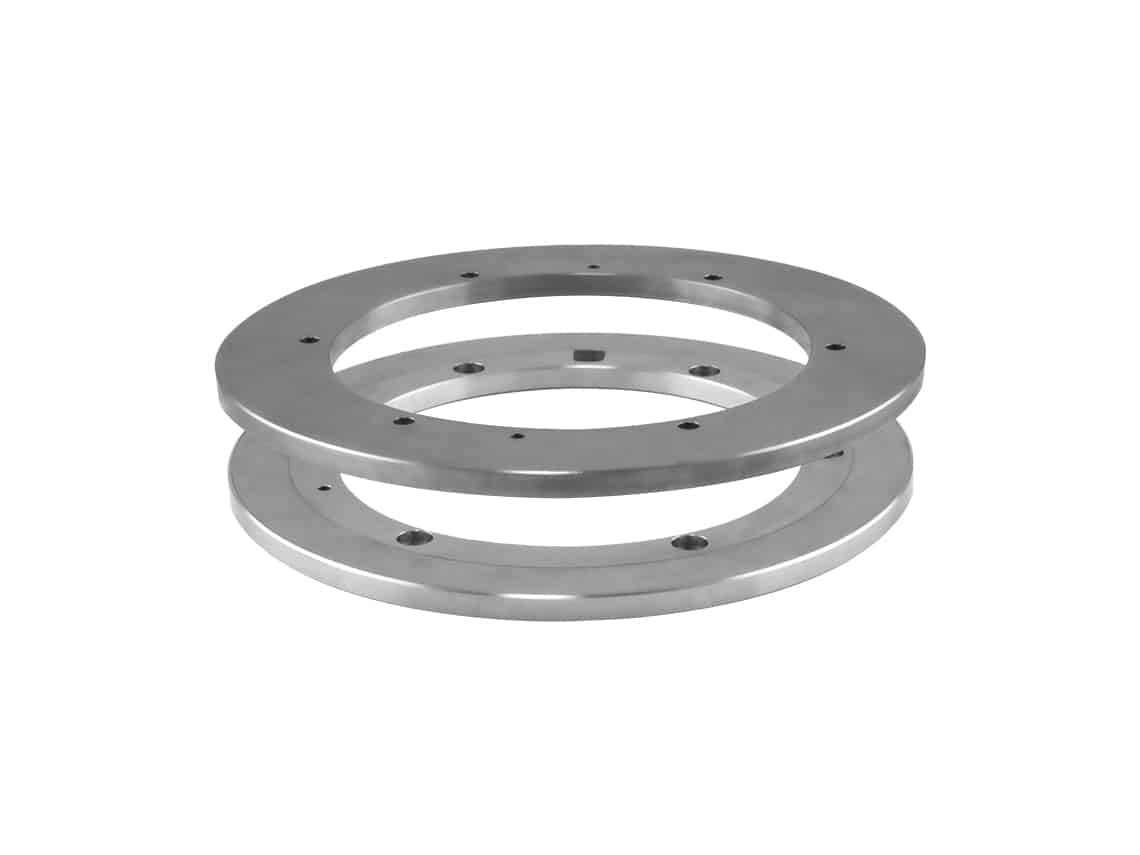


GMI-ANG Series
The FLUX GMI Angle Family of encoders is the highest performing in terms of accuracy and resolution.
Absolute lap measurement is based on FLUX’s patented principle called GMI. It consists of two steel rings to ensure maximum robustness and ease of mounting on applications where very high accuracy is required. Available in sizes ranging from 96 to 250 mm, it finds applications in machine tools, semiconductor manufacturing, rotary tables, torque motors, and industrial robots. Different output protocols allow interfacing with all CNCs or drivers on the market.
More info at flux.gmbh
Attributes
Harsh environemnts
Rotary
Technical Specifications
- Accuracy in the range of ArcSec
- IP67 degrees of protection
- Stainless steel encoder body for maximum thermal compatibility
- Up to 24-bit resolution
- Easy mounting thanks to through holes and centering pins
- Large internal hole
Download
FAQ
FLUX encoders are used across a wide range of industrial sectors requiring high precision, reliability, and motion dynamics. Key applications include robotics, industrial automation, the medical and aerospace sectors, machine tools, and all systems dedicated to precision measurement and control.
FLUX offers a range of encoders designed to suit a wide variety of applications, from compact solutions to large-diameter encoders. The standard range covers outer diameters from 34 mm, for the IND-ROT series, up to 375 mm, for the IND-MAX series. Custom solutions can also be evaluated for specific requirements.
FLUX encoders are designed for extreme conditions and can operate at temperatures ranging from -40°C to +85°C, depending on the model. Many models feature an IP67 protection rating, making them resistant to dust, moisture, and water. They are also engineered to withstand high levels of vibration and shock, ensuring long service life in harsh environments.
The Giant Magneto Impedance (GMI®) effect is a physical phenomenon based on the skin effect. It is characterized by a significant variation in a material’s impedance when exposed to an external magnetic field. In FLUX encoders, the position of the sensor relative to the magnetic scale generates a signal based on this very physical principle. FLUX fully leverages the properties of the GMI® effect to develop an innovative position measurement technology capable of delivering high precision, reliability, and repeatability.
FLUX encoders use Giant Magneto Impedance (GMI®) technology, which enables real-time position detection with extremely high speed and precision. This technology combines the accuracy typical of optical encoders with the robustness of inductive encoders, while offering the wide mounting tolerances characteristic of magnetic encoders. The result is an encoder that combines precision, reliability, and ease of integration, making it ideal for the most demanding industrial applications, without compromise.
Yes. FLUX develops custom encoder solutions to meet specific application requirements. Customizations may involve mechanical interfacing, dimensions, wiring, and electrical interfacing, such as connector type, signal type, or communication protocol. Each request is evaluated on a case-by-case basis to verify its technical and economic feasibility and identify the most suitable solution for the application.
Request information
Tobias

Tobias